
Dev Agents
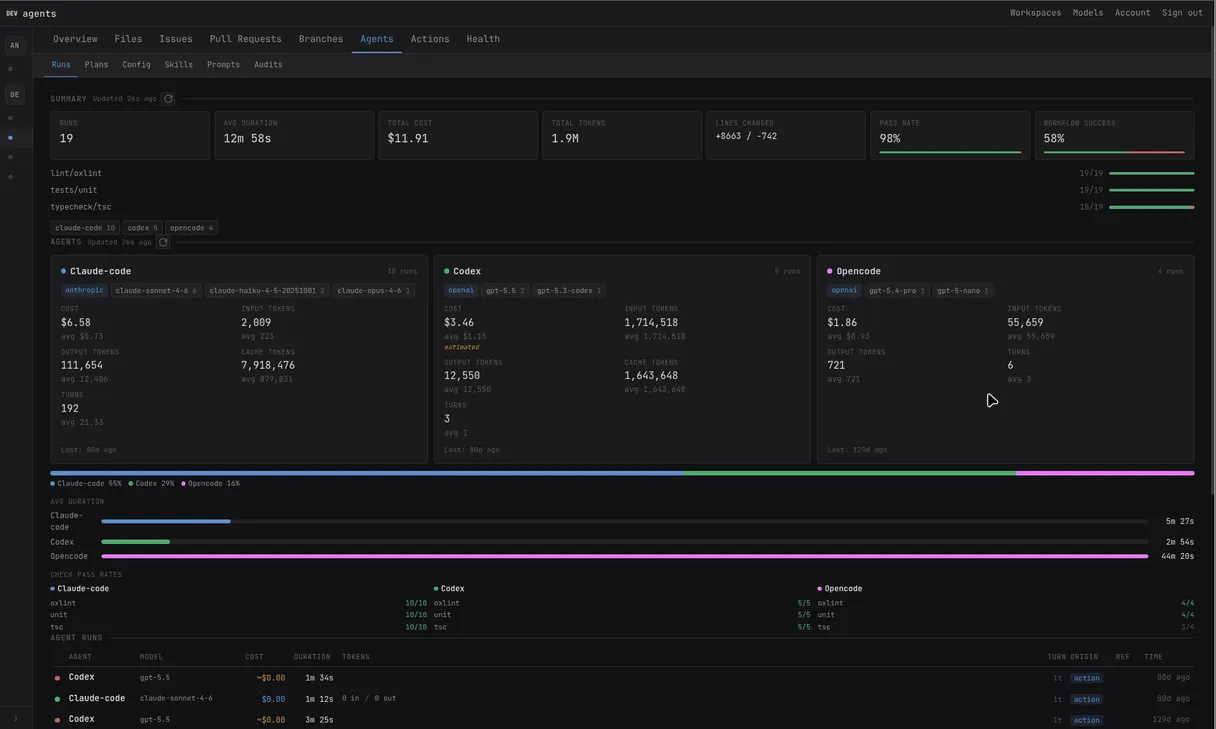
In development, paused for now
Dev Agents still needs work. Building it is what led me to start Sandboxd, and development picks up again once Sandboxd is in better shape. Follow along on GitHub.
Overview
Dev Agents is an orchestrator for coding agents working inside existing codebases. It decides what runs, where, and with which agent, and keeps every result in sight. The flow has three steps: a human reviews and approves a plan, agents implement it, and everything they do is tracked through repository events, health checks and code reviews.
It is built for brownfield repositories, the ones with history, conventions and things that break, rather than greenfield demos.
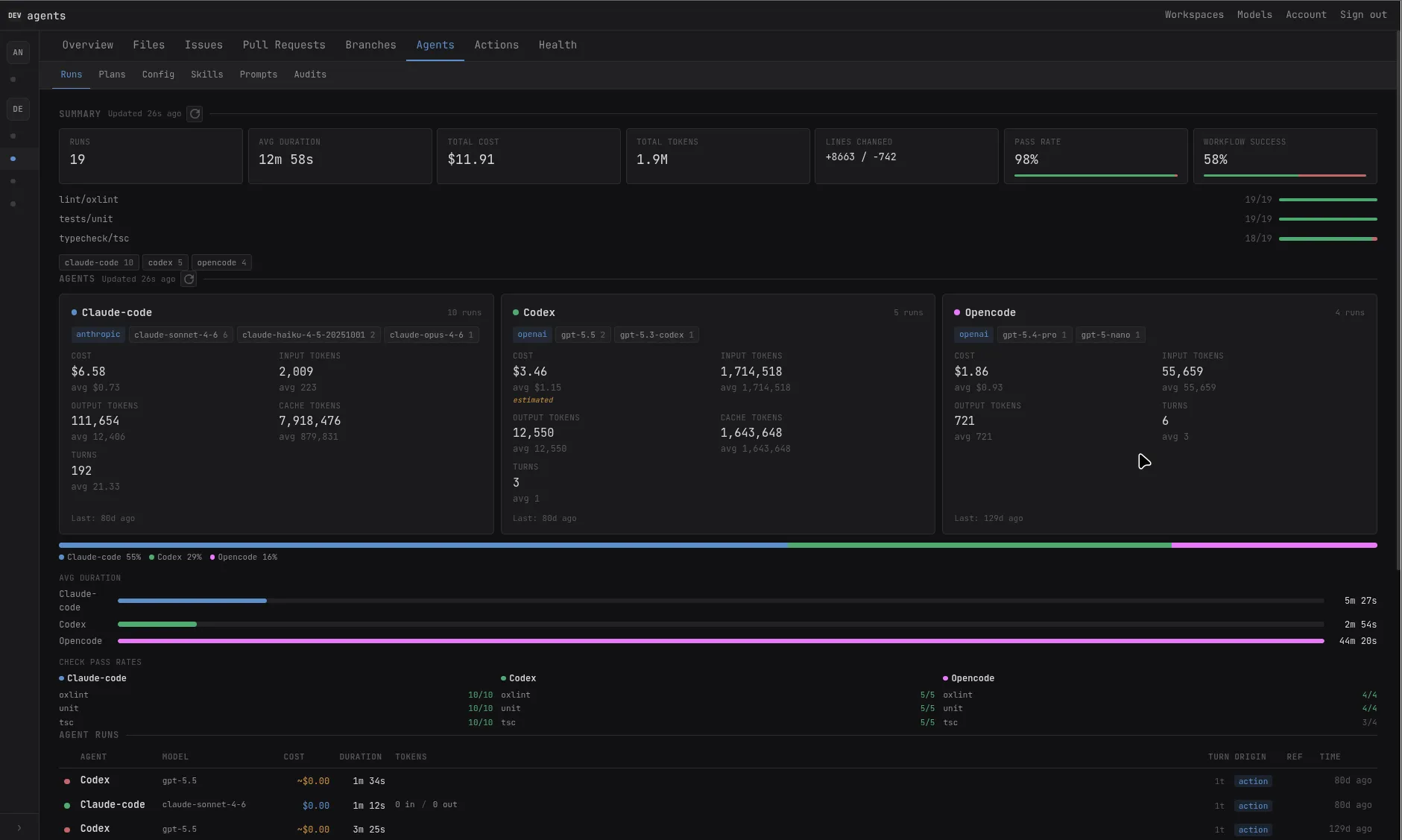
- Planning: plans are written up and wait for a human to approve them.
- Implementation: approved plans are handed to agents, which do the work in the repository.
- Tracking: pull requests, checks and reviews feed back into the console so nothing happens unseen.
The repository is a Bun monorepo with the core logic, serverless functions for the API and webhooks, the console UI, and the workflow actions, deployed with SST.
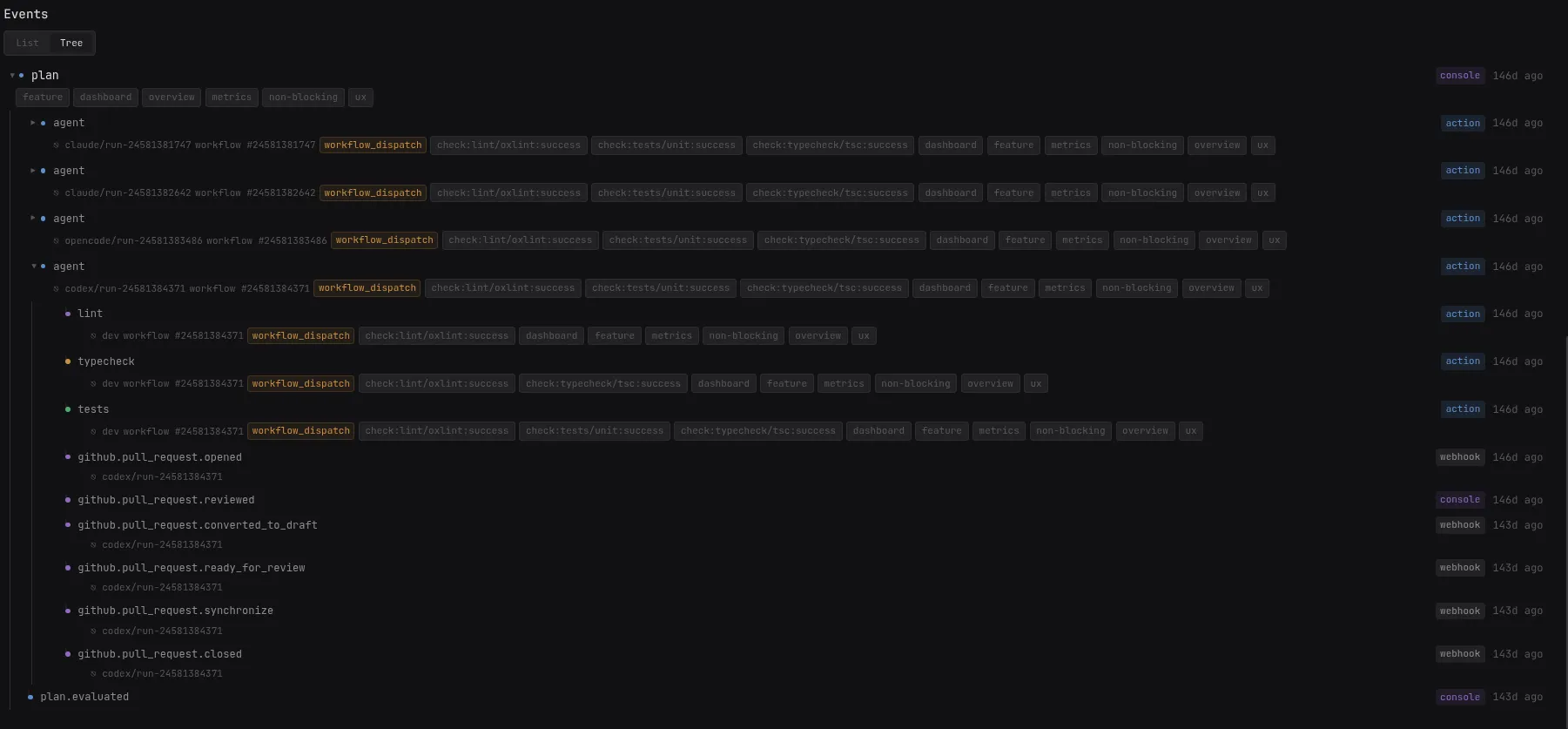
Same plan, several agents
A plan can be handed to more than one agent at once, today Claude Code, Codex and Opencode. Each run gets its own pull request, checks, cost and a judge score, so the results sit side by side and the best one gets merged.
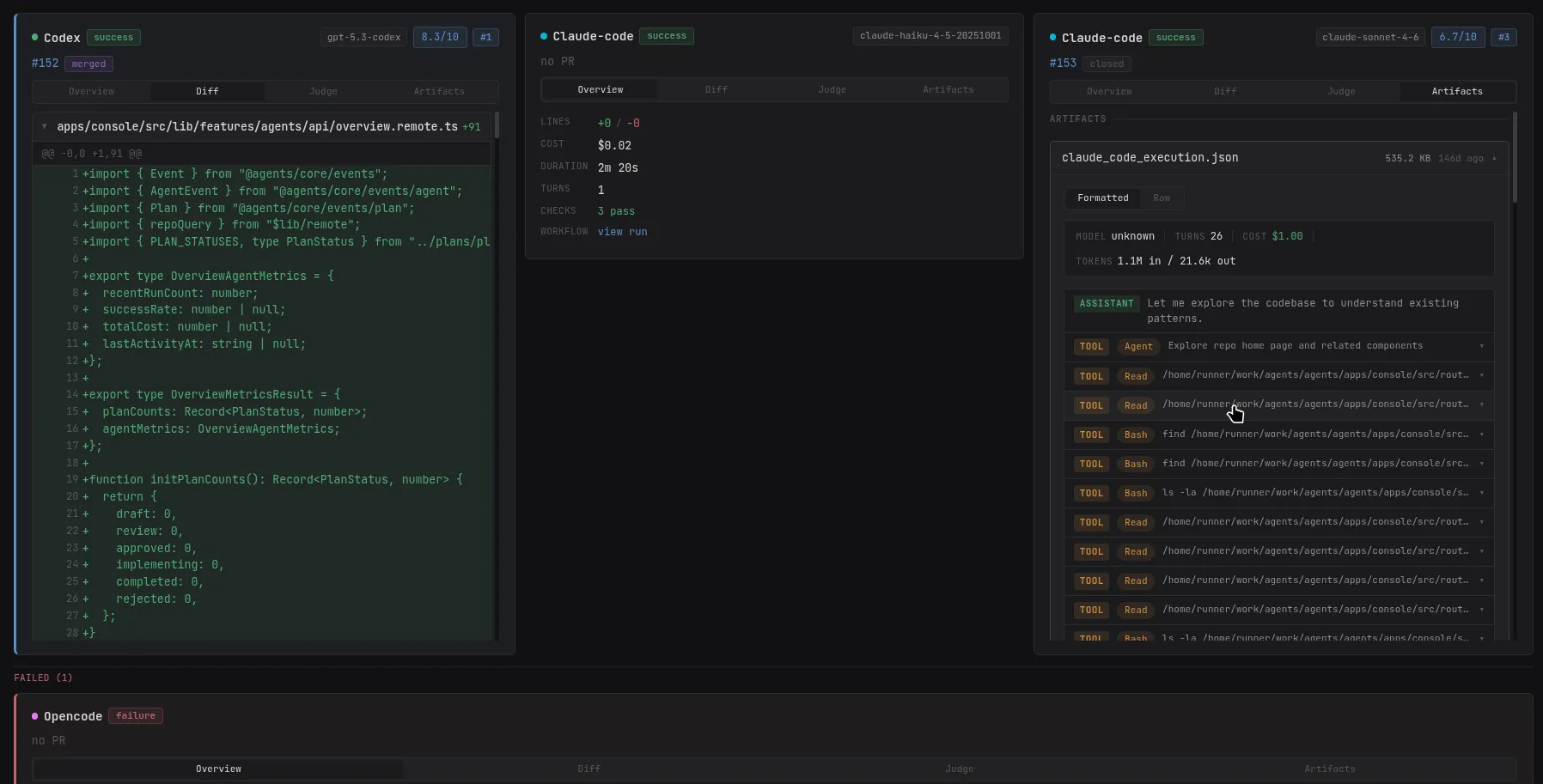
CI/CD and preview environments
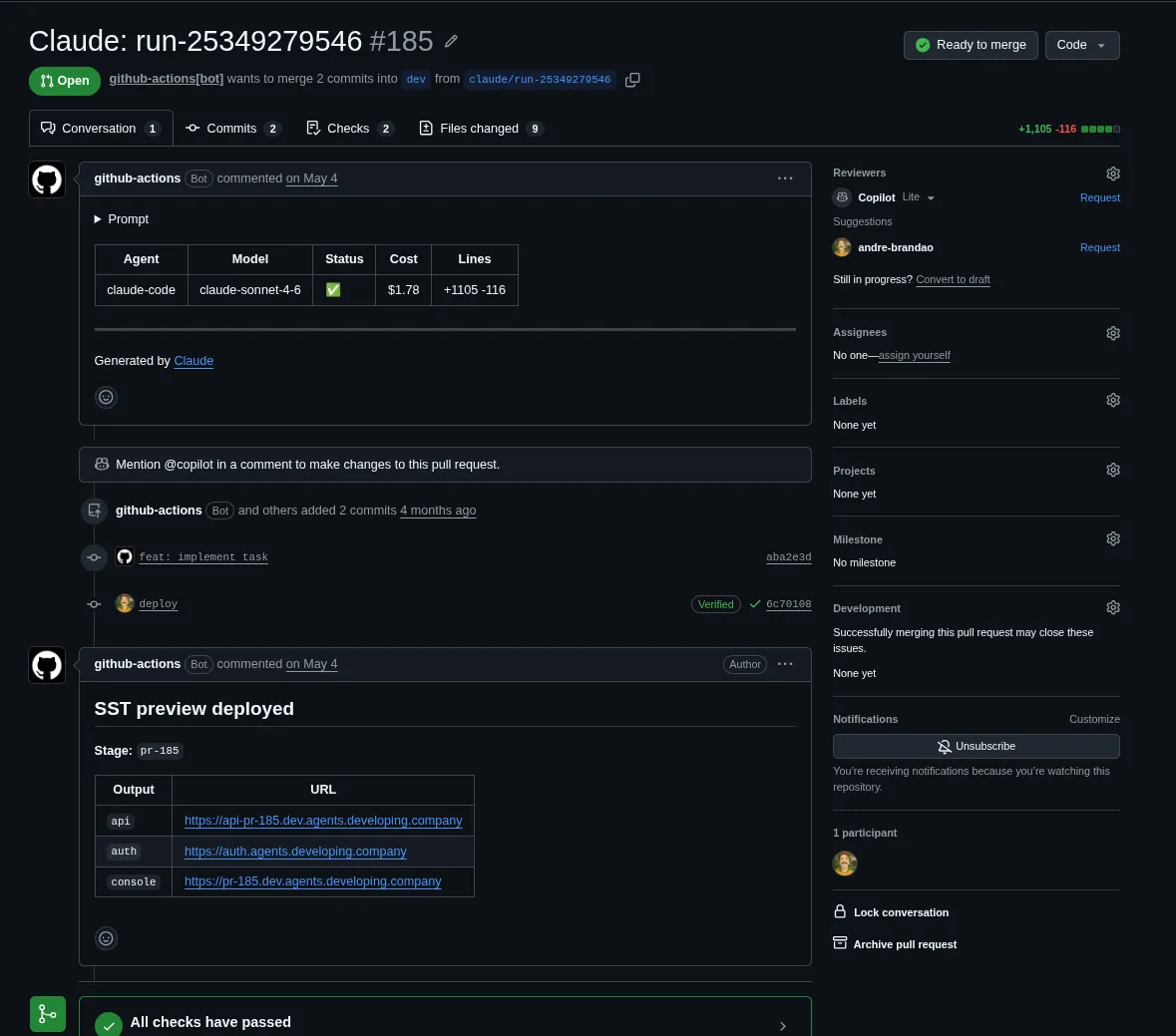
Every agent run ends in a normal pull request. The bot opens it with the prompt, the model, the cost and the lines changed, the usual lint, test and typecheck workflows run on it, and a preview environment is deployed for that PR alone, with its own API, auth and console URLs. Reviewing an agent’s work means clicking a link, not checking out a branch.
Where Sandboxd comes in
Agents need somewhere safe to run: a disposable environment with the repository checked out, a terminal you can watch, and nothing to clean up afterwards. That need turned into its own project, Sandboxd, and Dev Agents will run on top of it.